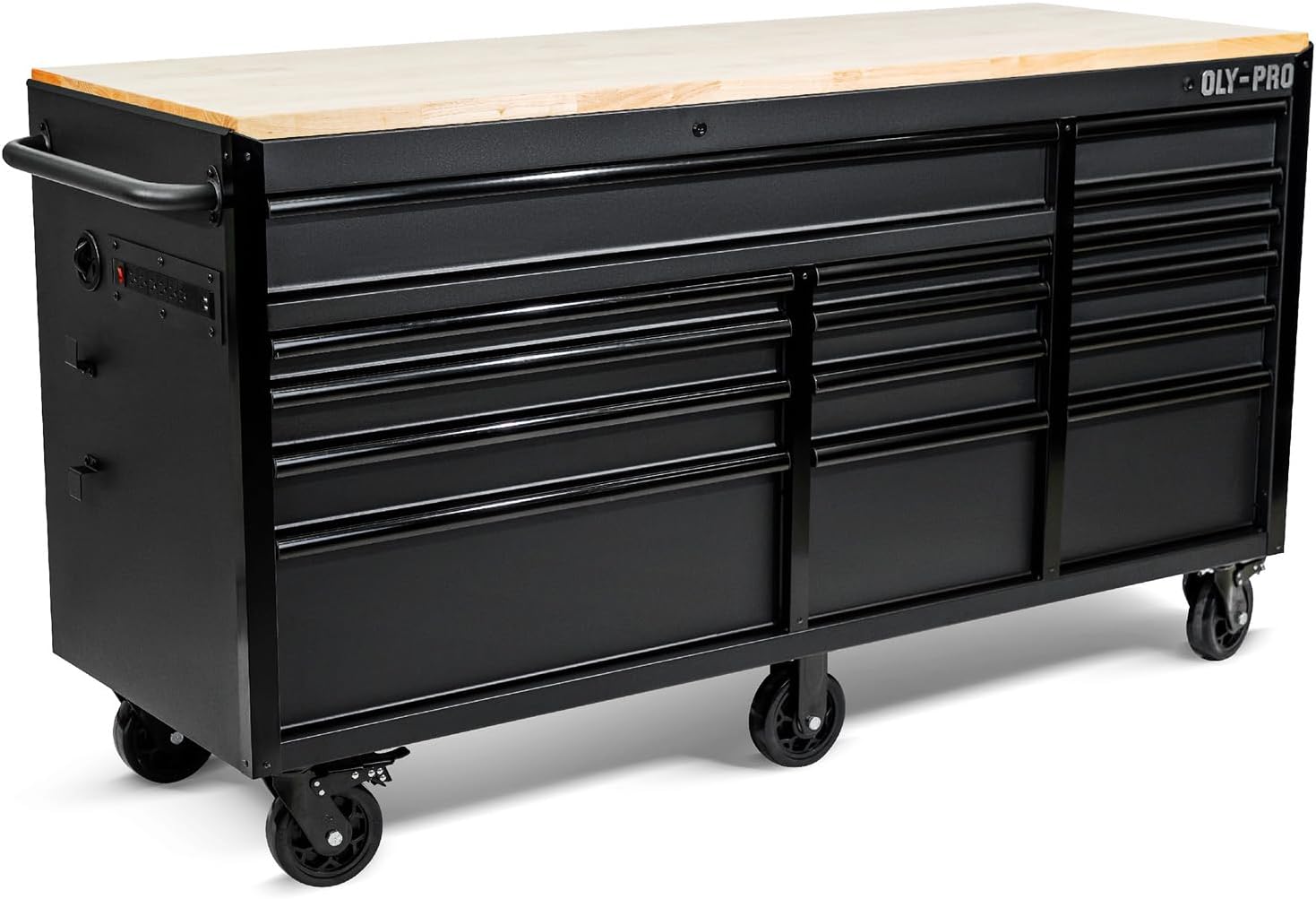
Common Husky tool box replacement parts include replacement keys, lock cylinders, drawer slides, caster wheels, drawer liners, handles, gas struts, power strips, USB charging modules, and drawer latches. Before ordering any replacement part, locate your Husky model number because parts can vary significantly between tool chest sizes, duty grades, and production years.
If your tool box is several years old, always compare measurements, mounting locations, bolt patterns, and part specifications before purchasing replacements.
Why Replacement Parts Matter
A Husky tool box can last for many years, but certain components wear out faster than the cabinet itself.
Parts that commonly require replacement include:
- Keys
- Locks
- Drawer slides
- Casters
- Handles
- Drawer liners
- Gas struts
- Power strips
- USB charging ports
- Drawer latches
- Hinges
- Fasteners
Replacing these components is often much cheaper than replacing the entire tool box.
A properly maintained Husky tool chest can continue working for years after replacing a few worn parts.
Find Your Husky Model Number First
Before searching for replacement parts, locate your Husky model number.
The model number is usually found:
- Inside a drawer
- On the rear panel
- On the side panel
- Near the lock area
- On the original packaging
- In the owner’s manual
The model number is important because Husky uses different parts across:
- Standard Duty tool boxes
- Heavy Duty tool boxes
- Professional Duty tool boxes
- Mobile workbenches
- Rolling cabinets
- Tool chests
- Side lockers
Even two Husky tool boxes with similar sizes may use different parts.
Husky Tool Box Replacement Keys
Lost Husky Tool Box Keys
Missing keys are one of the most common Husky tool box problems.
Before ordering a replacement key:
- Locate the lock cylinder.
- Find the key code stamped on the lock.
- Record the code exactly.
- Verify the tool box model number.
- Order the correct replacement key.
Most replacement keys are sold by lock code rather than tool box size.
Where Is the Key Code Located?
The key code is usually stamped on:
- The lock face
- The lock cylinder
- The original key
- The owner’s documentation
Always confirm the code before ordering.
Tips for Preventing Lost Keys
- Keep a spare key.
- Store the key code in your phone.
- Label spare keys.
- Avoid leaving keys in the lock during transport.
Husky Tool Box Lock Replacement
Sometimes the key is not the problem. The lock itself may be damaged.
Signs a lock needs replacement:
- Key will not turn
- Lock feels loose
- Lock cylinder spins
- Lock mechanism sticks
- Drawer lock no longer engages
- Lock was damaged during transport
When replacing a lock cylinder, verify:
- Lock diameter
- Lock length
- Mounting style
- Key code compatibility
- Tool box model
Replacing the lock is usually easier than replacing the entire locking system.
Husky Drawer Slide Replacement
Drawer slides are one of the most heavily used parts of any tool chest.
Signs Drawer Slides Need Replacement
You may need new drawer slides if:
- Drawer sags
- Drawer sticks
- Drawer feels rough
- Drawer will not close
- Drawer feels loose
- Soft-close feature stops working
- Drawer slides are bent
- Ball bearings are missing
Before replacing slides, inspect them carefully.
Check These Issues First
Many slide problems are caused by:
- Dirt
- Metal shavings
- Loose screws
- Overloaded drawers
- Misaligned drawers
- Bent drawer liners
Before buying new slides:
- Empty the drawer.
- Remove debris.
- Clean the tracks.
- Check mounting screws.
- Inspect slide rails.
Sometimes cleaning solves the problem.
How to Match Replacement Drawer Slides
When measuring replacement slides, record:
- Slide length
- Slide width
- Mounting hole pattern
- Drawer width
- Slide type
- Soft-close design
- Ball-bearing design
Not all Husky tool boxes use identical slides.
Always compare dimensions before ordering.
Husky Tool Box Caster Replacement
Casters are critical on rolling cabinets and mobile workbenches.
Over time, wheels can wear out from:
- Heavy loads
- Uneven floors
- Garage debris
- Frequent movement
- Outdoor use
Signs Casters Need Replacement
Replace casters if:
- Wheels wobble
- Wheel locks fail
- Wheels crack
- Cabinet becomes difficult to move
- Wheels flatten
- Casters squeak excessively
- Swivel mechanism sticks
How to Match Husky Replacement Casters
Before ordering casters, measure:
- Wheel diameter
- Wheel width
- Mounting plate size
- Bolt hole pattern
- Overall caster height
- Weight capacity
Weight rating is especially important.
A heavy-duty rolling cabinet may require stronger replacement casters than a small tool chest.
Fixed vs Swivel Casters
Most Husky rolling tool boxes use a combination of:
Fixed Casters
Benefits:
- Better straight-line movement
- More stability
Swivel Casters
Benefits:
- Easier turning
- Better maneuverability
Match the original configuration whenever possible.
Husky Drawer Liner Replacement
Drawer liners help protect both the tool box and the tools stored inside.
Benefits include:
- Reduced tool movement
- Less noise
- Protection from scratches
- Better drawer appearance
- Improved organization
When Should You Replace Drawer Liners?
Replace liners if:
- Torn
- Oil soaked
- Curling
- Shrinking
- Worn through
- Difficult to clean
Many users upgrade to thicker non-slip liners for better protection.
How to Measure Replacement Liners
Measure:
- Drawer width
- Drawer depth
- Drawer count
Many replacement liners can be trimmed to fit.
Husky Tool Box Handle Replacement
Handles may become damaged from:
- Heavy pulling
- Transport
- Impact damage
- Corrosion
- Loose mounting hardware
Replace handles if:
- Bent
- Loose
- Cracked
- Broken
- Difficult to grip
When ordering a replacement:
- Measure handle length
- Measure mounting hole spacing
- Verify mounting hardware size
Husky Gas Strut Replacement
Some Husky top chests and lids use gas struts.
Gas struts help support:
- Top chest lids
- Workstation lids
- Lift-up storage compartments
Replace gas struts if:
- Lid falls unexpectedly
- Lid no longer stays open
- Strut leaks oil
- Strut feels weak
Always replace with the correct force rating.
Husky Power Strip Replacement
Many Husky mobile workbenches include:
- Built-in outlets
- USB ports
- Surge-protected strips
- Charging stations
Replace the power strip if:
- Outlets stop working
- USB ports fail
- Switch breaks
- Power cord becomes damaged
Always match:
- Voltage
- Outlet count
- Mounting size
- Cord length
Electrical components should be inspected carefully before replacement.
Husky Drawer Latch Replacement
Drawer latches help keep drawers closed during movement.
Replace latches if:
- Drawers open while rolling
- Latch spring fails
- Latch becomes damaged
- Drawer will not stay closed
A faulty latch can create safety issues when moving a loaded tool box.
Common Husky Tool Box Problems and Replacement Parts
| Problem | Likely Part |
|---|---|
| Lost key | Replacement key |
| Lock won’t turn | Lock cylinder |
| Drawer sags | Drawer slide |
| Drawer sticks | Drawer slide |
| Tool box won’t roll | Caster |
| Wheel lock broken | Caster |
| Lid won’t stay open | Gas strut |
| Drawer opens while moving | Latch |
| Power outlets not working | Power strip |
| Torn drawer surface | Drawer liner |
This table helps users quickly identify which component may need attention.
Can You Upgrade Husky Tool Box Parts?
In many cases, yes.
Common upgrades include:
- Heavy-duty casters
- Thicker drawer liners
- Better organization trays
- Foam inserts
- Socket rails
- Magnetic accessories
- Stronger drawer organizers
However, always verify compatibility before modifying the tool box.
Maintenance Tips to Extend Part Life
To make replacement parts last longer:
- Avoid overloading drawers.
- Keep drawer slides clean.
- Lock casters when parked.
- Lubricate moving parts if recommended.
- Wipe off moisture.
- Keep tools organized.
- Avoid slamming drawers.
- Inspect wheels regularly.
- Clean drawer liners.
- Tighten loose hardware.
Small maintenance steps can significantly extend component life.
When to Replace the Entire Tool Box
Sometimes replacing parts is no longer practical.
Consider replacing the tool box if:
- Cabinet frame is bent
- Multiple drawers are damaged
- Structural welds have failed
- Severe rust is present
- Multiple major components need replacement
- Repair cost approaches replacement cost
In most situations, replacing a few parts is far more economical than buying a new cabinet.
Final Recommendation
Most Husky tool box problems can be fixed with inexpensive replacement parts. Keys, locks, drawer slides, casters, drawer liners, handles, gas struts, and power strips are all common service items.
Before ordering anything:
- Record the model number.
- Measure the existing part.
- Verify compatibility.
- Compare mounting dimensions.
- Check weight ratings where applicable.
Taking a few minutes to confirm specifications can save time, money, and frustration.
FAQs
Where can I find my Husky tool box model number?
The model number is usually located inside a drawer, on the rear panel, side panel, or in the owner’s manual.
Can I get a replacement key for my Husky tool box?
Yes. Most replacement keys are ordered using the key code stamped on the lock cylinder.
Why is my Husky drawer sticking?
Common causes include dirt, metal shavings, overloaded drawers, bent slides, or damaged ball-bearing tracks.
How do I know if a caster needs replacement?
Replace casters if the wheels wobble, crack, fail to lock, flatten, or make movement difficult.
Can I replace Husky drawer slides?
Yes. Many Husky drawer slides can be replaced, but you should measure the slide length, mounting pattern, and drawer dimensions before ordering.
What type of drawer liner should I use?
A non-slip, trim-to-fit liner is usually the best choice for protecting both tools and drawer surfaces.
Can I replace the lock cylinder?
Yes. Lock cylinders can often be replaced if the key no longer works or the locking mechanism is damaged.
Why won’t my Husky lid stay open?
The gas strut may have failed and may need replacement.
Can I upgrade my Husky casters?
Yes. Many users upgrade to higher-capacity casters, but compatibility and mounting dimensions must be verified first.
Should I repair or replace my Husky tool box?
If the cabinet structure is still sound, replacing keys, locks, slides, casters, and liners is usually much more cost-effective than replacing the entire tool box.
Related Posts: