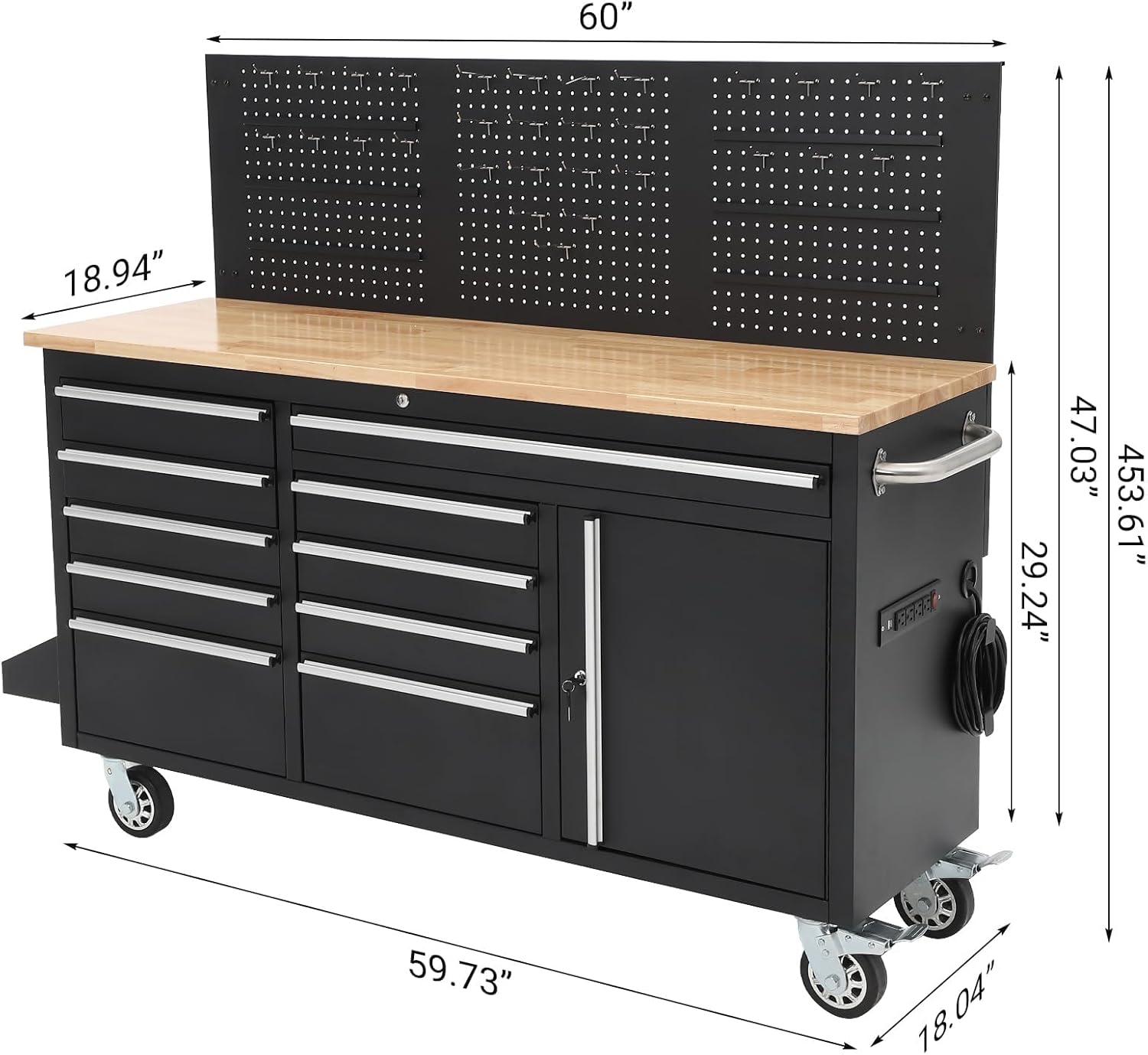
Steel gauge tells you how thick the steel is on a Husky tool box. A lower gauge number means thicker steel. For example, 16-gauge steel is thicker and usually stronger than 18-gauge or 21-gauge steel. Standard Duty Husky tool boxes are usually best for light home use, while Heavy Duty and Professional Duty models are better for heavy tools, mechanic work, and long-term garage storage.
If you plan to store heavy sockets, impact tools, pry bars, hammers, air tools, or large power tools, steel gauge should be one of the first specs you compare before buying a Husky tool box.
What Does Steel Gauge Mean on a Husky Tool Box?
Steel gauge is a measurement used to describe the thickness of sheet metal. In tool boxes, it helps you understand how strong the cabinet body, drawers, frame, and panels may be.
The important thing to remember is that steel gauge works backward:
- Lower gauge number = thicker steel
- Higher gauge number = thinner steel
For example:
- 16-gauge steel is thicker than 18-gauge steel.
- 18-gauge steel is thicker than 21-gauge steel.
- 21-gauge steel is lighter but usually not as strong as 16-gauge steel.
This matters because thicker steel can improve strength, reduce flex, support heavier tools, and improve long-term durability.
Why Steel Gauge Matters When Buying a Husky Tool Box
Steel gauge matters because a tool box is not just a storage cabinet. It has to support tool weight, drawer movement, caster stress, daily opening and closing, and sometimes workbench use.
A stronger steel frame can help with:
- Cabinet durability
- Drawer support
- Reduced flex
- Better stability
- Longer tool box life
- Stronger corner structure
- Better support for heavy tools
- Less vibration when moving the box
- Better performance under daily use
If you only store light home tools, thinner steel may be enough. But if you own heavy mechanic tools, thicker steel is usually worth the upgrade.
Husky Steel Gauge by Tool Box Grade
Husky tool boxes are commonly grouped into three main grades: Standard Duty, Heavy Duty, and Professional Duty.
| Husky Grade | Common Steel Gauge | Best For | Typical User |
|---|---|---|---|
| Standard Duty | 20–22 gauge | Light tools and home storage | Homeowners and beginners |
| Heavy Duty | 18–19 gauge | Heavier garage tools and DIY use | DIY users and home mechanics |
| Professional Duty | 16 gauge | Heavy daily use and large tool collections | Mechanics and workshop users |
The lower the gauge number, the thicker and stronger the steel usually is.
Standard Duty Husky Tool Box Steel Gauge
Standard Duty Husky tool boxes are usually made for light garage storage, household tools, and basic DIY use. These models are often lighter, more affordable, and easier to move than larger Heavy Duty or Professional Duty tool boxes.
A Standard Duty Husky tool box is usually enough for:
- Screwdrivers
- Pliers
- Tape measure
- Small socket sets
- Household repair tools
- Light power tools
- Utility knives
- Small parts
- Basic garage items
Standard Duty models can work well if you are organizing a home garage and do not own a large collection of heavy tools.
However, if you plan to store many sockets, impact tools, air tools, or mechanic equipment, you may want to upgrade to a Heavy Duty model.
Heavy Duty Husky Tool Box Steel Gauge
Heavy Duty Husky tool boxes are designed for stronger garage storage. These models usually use thicker steel than Standard Duty boxes and are better suited for heavier tools.
A Heavy Duty Husky tool box is a better choice for:
- Home mechanics
- Serious DIY users
- Automotive tools
- Heavy socket sets
- Wrench sets
- Ratchets
- Impact tools
- Air tools
- Power tools
- Garage workshops
Heavy Duty models usually offer a better balance between price, strength, and storage capacity. For most homeowners with a growing tool collection, this is often the best category to consider.
Professional Duty Husky Tool Box Steel Gauge
Professional Duty Husky tool boxes are made for the heaviest tool collections and frequent use. These models usually use thicker steel, stronger drawer slides, and heavier-duty caster systems.
A Professional Duty Husky tool box is best for:
- Professional mechanics
- Large garages
- Workshop owners
- Daily tool use
- Heavy automotive tools
- Commercial-style storage
- Users who open and close drawers many times per day
Professional Duty models usually cost more, but they offer stronger construction for long-term use.
If you need maximum durability, a Professional Duty Husky tool box with 16-gauge steel construction is usually the strongest choice.
16 Gauge vs 18 Gauge vs 21 Gauge Steel
Here is a simple comparison for buyers.
| Steel Gauge | Thickness Level | Strength Level | Best Use Case |
| 16 gauge | Thick | Very strong | Professional use, heavy tools, daily garage work |
| 18 gauge | Medium-heavy | Strong | Home mechanics and serious DIY users |
| 19 gauge | Medium-heavy | Strong | Heavy-duty garage storage |
| 20 gauge | Medium-light | Good for light use | Homeowners and basic tools |
| 21–22 gauge | Lighter | Basic storage | Small tools and occasional use |
A lower gauge is generally better for durability, but it can also make the tool box heavier and more expensive.
Is Thicker Steel Always Better?
Thicker steel is usually better for strength, but it is not always necessary for every user.
Thicker steel is better if you:
- Store heavy tools
- Use the tool box every day
- Move the tool box often
- Need a long-term garage setup
- Use the top as a work surface
- Store dense socket sets
- Own mechanic tools
- Want less cabinet flex
Thinner steel may be enough if you:
- Store basic household tools
- Use the box occasionally
- Have a small garage
- Need a budget-friendly tool chest
- Do not store heavy power tools
- Want something lighter and easier to move
The best choice depends on your tools, not just the gauge number.
Steel Gauge and Drawer Strength
Steel gauge affects the cabinet body, but drawer strength also depends on drawer slides, drawer depth, and how weight is distributed.
A thicker steel drawer can feel more solid, but the drawer slide rating is still very important. If the slides are weak, the drawer can still sag or stick even if the cabinet has thicker steel.
When comparing Husky tool boxes, check:
- Steel gauge
- Drawer slide weight rating
- Ball-bearing slides
- Soft-close drawer design
- Double slides on deep drawers
- Drawer depth
- Drawer width
- Total cabinet capacity
For heavy tools, do not rely on steel gauge alone. A good heavy-duty tool box should combine thicker steel with strong drawer slides.
Steel Gauge and Weight Capacity
Steel gauge is closely related to weight capacity, but they are not the same thing.
Steel gauge tells you the thickness of the steel. Weight capacity tells you how much weight the cabinet, drawers, slides, casters, and worktop can safely support.
A tool box with thicker steel often has better strength, but you should still check the official weight capacity before buying.
Important weight specs include:
- Total cabinet capacity
- Drawer slide capacity
- Caster capacity
- Worktop capacity
- Total drawer load capacity
For example, a large Husky mobile workbench may use heavy-duty steel construction, but each drawer still has a specific slide rating. Always follow the model’s listed capacity.
Steel Gauge and Caster Strength
Caster strength matters because rolling tool boxes carry a lot of weight. Even if the cabinet uses thick steel, weak casters can make the box hard to move or unsafe when loaded.
When comparing rolling Husky tool boxes, check:
- Caster size
- Caster weight rating
- Locking brakes
- Swivel design
- Mounting plate strength
- Wheel material
- Movement on concrete floors
A heavier steel box may need stronger casters because the cabinet itself weighs more before tools are even added.
Steel Gauge and Long-Term Durability
A thicker steel Husky tool box usually performs better over time, especially under heavy use.
Thicker steel can help reduce:
- Cabinet flex
- Drawer sag
- Frame twisting
- Corner damage
- Vibration while rolling
- Wear from heavy tools
- Dents from daily use
This is why Heavy Duty and Professional Duty models are usually better for users who plan to keep the tool box for many years.
How to Choose the Right Steel Gauge
Use this simple buying Husky rolling tool box guide.
Choose Standard Duty If:
You only need storage for basic tools and light DIY work.
Good for:
- Homeowners
- Renters
- Small garages
- Basic repairs
- Occasional use
- Household tools
Choose Heavy Duty If:
You have heavier tools and want a stronger long-term garage setup.
Good for:
- Home mechanics
- DIY users
- Automotive tools
- Power tools
- Socket sets
- Wrench sets
- Frequent garage use
Choose Professional Duty If:
You need maximum durability and use your tool box often.
Good for:
- Mechanics
- Workshops
- Commercial garages
- Heavy daily use
- Large tool collections
- Professional storage setups
Best Husky Steel Gauge for Mechanics
For mechanics, a Heavy Duty or Professional Duty Husky tool box is usually the better choice. Mechanics often store heavy tools such as socket sets, impact tools, air tools, pullers, and large wrenches.
A Standard Duty model may work for light home maintenance, but it may not be ideal for heavy mechanic tools over the long term.
For most home mechanics, a Heavy Duty Husky tool box is a strong balance of cost and durability.
For professional mechanics, a Professional Duty Husky tool box is the better long-term option.
Best Husky Steel Gauge for Homeowners
For homeowners, the best steel gauge depends on the tool collection.
If you only own basic tools, a Standard Duty Husky tool box can work well.
If your tool collection includes drills, saws, sockets, wrenches, chargers, and automotive tools, a Heavy Duty model is usually a better choice.
Many homeowners buy a smaller box first and outgrow it quickly. If you expect your tool collection to grow, choosing Heavy Duty from the start may save money later.
Best Husky Steel Gauge for Garage Workshops
For garage workshops, Heavy Duty is usually the safest choice. It gives you stronger construction without always needing the higher price of Professional Duty.
Choose Heavy Duty if your garage setup includes:
- Automotive repair
- DIY building projects
- Power tools
- Battery chargers
- Large socket sets
- Tool organization systems
- Regular weekend projects
Choose Professional Duty if the tool box will be used daily or loaded with very heavy tools.
Common Mistakes Buyers Make
Avoid these mistakes when comparing Husky tool box steel gauge:
- Thinking higher gauge means thicker steel
- Buying based only on price
- Ignoring drawer slide capacity
- Ignoring caster quality
- Choosing Standard Duty for heavy mechanic tools
- Not checking total weight capacity
- Not measuring garage space
- Ignoring drawer depth
- Forgetting to compare warranty
- Assuming all Husky boxes use the same steel gauge
The biggest mistake is buying a tool box based only on width. Two Husky tool boxes can have similar dimensions but very different construction quality.
Final Recommendation
Steel gauge is one of the most important specs to check when buying a Husky tool box. A lower gauge number means thicker steel, which usually improves strength, stability, and long-term durability.
For light home tools, a Standard Duty Husky tool box can be enough.
For most DIY users and home mechanics, a Heavy Duty Husky tool box is the best balance of strength and value.
For professional use or very heavy tool collections, a Professional Duty Husky tool box with thicker steel construction is the strongest option.
Before buying, compare steel gauge together with drawer slide rating, caster capacity, total weight capacity, drawer depth, lock design, and warranty.
FAQs
What does steel gauge mean on a Husky tool box?
Steel gauge measures the thickness of the steel used in the tool box. A lower gauge number means thicker steel. For example, 16-gauge steel is thicker and usually stronger than 18-gauge or 21-gauge steel.
What steel gauge are Husky tool boxes?
Husky tool boxes vary by model and duty grade. Standard Duty models are commonly listed around 20–22 gauge, Heavy Duty models around 18–19 gauge, and Professional Duty models around 16 gauge.
Is 16-gauge steel good for a tool box?
Yes, 16-gauge steel is strong for a tool box. It is usually better for heavy tools, professional use, and long-term garage storage.
Is 18-gauge steel strong enough for a tool chest?
Yes, 18-gauge steel can be strong enough for many homeowners, DIY users, and home mechanics. It is usually a good middle option between light-duty and professional-grade construction.
Is thicker steel always better for a Husky tool box?
Thicker steel is usually stronger, but it is not always necessary. If you only store light tools, a Standard Duty box may be enough. If you store heavy sockets, impact tools, or power tools, thicker steel is usually better.
Does steel gauge affect drawer capacity?
Steel gauge can affect overall cabinet strength, but drawer capacity also depends on drawer slides. Always check the drawer slide weight rating before storing heavy tools.
What Husky tool box is best for heavy tools?
A Heavy Duty or Professional Duty Husky tool box is best for heavy tools. These models usually have thicker steel, stronger drawer slides, better casters, and higher total Husky tool box capacity.
What is better, 16 gauge or 18 gauge steel?
16-gauge steel is thicker and usually stronger than 18-gauge steel. However, 18-gauge steel can still be a good choice for home mechanics and serious DIY users.
Should homeowners buy Standard Duty or Heavy Duty Husky tool boxes?
Homeowners with basic tools can choose Standard Duty. Homeowners with larger tool collections, power tools, automotive tools, or heavy sockets should consider Heavy Duty.
Does a heavier tool box mean better quality?
Not always, but heavier tool boxes often use thicker steel and stronger components. You should still compare drawer slides, caster capacity, warranty, and total weight capacity.