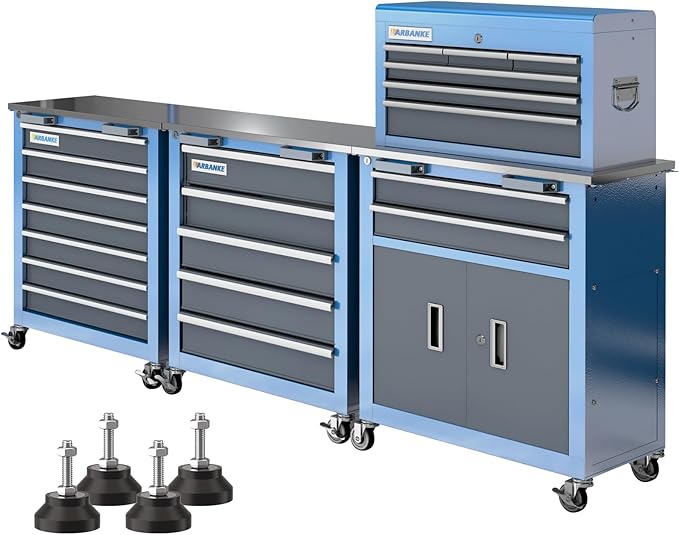
The best way to organize a Husky tool box is to arrange tools by weight, category, and how often you use them. Keep frequently used hand tools in the top drawers, medium-weight tools in the middle drawers, and heavy tools like drills, grinders, impact tools, batteries, hammers, and large socket sets in the bottom drawers. This setup makes tools easier to find and helps keep the cabinet stable.
Use drawer liners, socket rails, wrench organizers, foam inserts, small parts trays, and labels to keep everything clean and easy to access.
Why Tool Box Organization Matters
A Husky tool box can hold a lot of tools, but without a proper system, drawers quickly become messy. Good organization helps you work faster, protect your tools, and avoid overloading drawers.
A well-organized Husky tool box helps with:
- Faster tool access
- Better project workflow
- Safer weight distribution
- Less drawer damage
- Cleaner garage storage
- Better use of drawer space
- Easier inventory checks
- Less time searching for tools
- Better protection for expensive tools
The goal is simple: every tool should have a clear place.
Best Drawer Layout for a Husky Tool Box
Here is a simple drawer layout that works for most Husky rolling tool boxes, tool chests, and mobile workbenches.
| Drawer Area | Best Tools to Store | Why It Works |
|---|---|---|
| Top drawers | Sockets, ratchets, screwdrivers, pliers, measuring tools | Easy access for frequent-use tools |
| Middle drawers | Wrenches, specialty tools, electrical tools, project tools | Good for medium-weight tools |
| Bottom drawers | Drills, grinders, batteries, impact tools, hammers, pry bars | Keeps heavy weight low and stable |
| Side cabinet or locker | Long tools, spray cans, chargers, larger accessories | Good for bulky or tall items |
| Worktop | Current project tools only | Keeps workspace clean and usable |
This layout works because it follows two rules: keep frequent tools easy to reach and keep heavy tools low.
Step 1: Empty the Tool Box First
Before organizing your Husky tool box, empty every drawer. This gives you a clean starting point and helps you see exactly what you own.
Place your tools on the floor, workbench, or cardboard sheet and group them by category.
Sort tools into groups like:
- Sockets
- Ratchets
- Wrenches
- Screwdrivers
- Pliers
- Measuring tools
- Cutting tools
- Electrical tools
- Drill bits
- Power tools
- Batteries
- Chargers
- Hammers
- Pry bars
- Specialty tools
- Small parts
- Rarely used tools
This step also helps you find duplicate, broken, or missing tools.
Step 2: Clean the Drawers
After emptying the box, wipe down the drawers. Remove dust, metal shavings, screws, oil, and loose parts.
Clean drawers help protect:
- Drawer liners
- Tool finishes
- Drawer slides
- Ball-bearing slides
- Soft-close systems
- Painted drawer surfaces
If your Husky tool box has drawer liners, remove them, shake them out, wipe them clean, and reinstall them after the drawers are dry.
Step 3: Install Drawer Liners
Drawer liners are one of the easiest ways to protect your Husky tool box. They help prevent tools from sliding around and reduce scratches inside drawers.
Drawer liners are useful for:
- Protecting drawer paint
- Reducing tool movement
- Making drawers quieter
- Preventing metal-on-metal contact
- Keeping tools in place when the box rolls
- Improving drawer appearance
Many Husky tool chests include drawer liners, but you can also cut replacement liners to fit each drawer.
Drawer liners do not increase drawer weight capacity, but they help keep tools more stable.
Step 4: Organize the Top Drawers
Top drawers should hold the tools you use most often. These are usually lighter tools and quick-access tools.
Good tools for top drawers include:
- Ratchets
- Small sockets
- Screwdrivers
- Pliers
- Tape measure
- Utility knife
- Hex keys
- Marker
- Flashlight
- Small parts tray
- Pick tools
- Small wrench sets
Top drawers should not be overloaded with heavy tools. Avoid filling a top drawer with large impact sockets or heavy metal parts.
Best Top Drawer Setup
Use the top shallow drawer for your most-used tools:
- Socket rails on one side
- Ratchets in the center
- Screwdrivers in a tray
- Pliers in an organizer
- Tape measure and utility knife near the front
This makes the drawer a quick-access zone for daily use.
Step 5: Organize Socket Sets
Sockets are small but heavy, so they need careful organization.
Use socket rails or socket trays to organize:
- 1/4-inch sockets
- 3/8-inch sockets
- 1/2-inch sockets
- Metric sockets
- SAE sockets
- Deep sockets
- Shallow sockets
- Impact sockets
Keep your most-used sockets in an upper or middle drawer. Store large impact sockets in a lower drawer because they are heavier.
Socket Organization Tips
- Separate metric and SAE sockets.
- Separate shallow and deep sockets.
- Keep impact sockets apart from chrome sockets.
- Use labeled socket rails.
- Do not overload one small drawer with every socket set.
- Keep large sockets lower in the cabinet.
A full socket drawer can become very heavy, so always think about drawer slide capacity.
Step 6: Organize Wrenches
Wrenches are best stored in a middle drawer because they are used often but can be heavier than screwdrivers or pliers.
Organize wrenches by type:
- Combination wrenches
- Ratcheting wrenches
- Adjustable wrenches
- Metric wrenches
- SAE wrenches
- Line wrenches
- Allen keys
- Specialty wrenches
Use wrench racks or foam inserts to keep each wrench visible. This helps you quickly see if one is missing.
Best Wrench Drawer Setup
Place metric wrenches on one side and SAE wrenches on the other. Keep adjustable wrenches and specialty wrenches near the back or side of the drawer.
Step 7: Organize Screwdrivers and Pliers
Screwdrivers and pliers are used often, so they should be easy to reach.
Store screwdrivers by type:
- Phillips
- Flathead
- Torx
- Precision screwdrivers
- Stubby screwdrivers
- Long screwdrivers
Store pliers by type:
- Needle-nose pliers
- Slip-joint pliers
- Locking pliers
- Diagonal cutters
- Lineman pliers
- Wire strippers
- Channel-lock style pliers
Use drawer trays or vertical plier racks if the drawer height allows.
Step 8: Organize Power Tools
Power tools are heavier and bulkier, so they should go in deep lower drawers.
Store these in bottom drawers:
- Cordless drills
- Impact drivers
- Impact wrenches
- Grinders
- Sanders
- Oscillating tools
- Batteries
- Chargers
- Air tools
- Tool cases
Keep batteries and chargers together if possible. If your Husky mobile workbench has a power strip or USB ports, use a nearby drawer for battery charging accessories.
Do not place every heavy power tool in one drawer unless the drawer slide rating supports the load.
Step 9: Organize Heavy Tools in Bottom Drawers
The bottom drawers should hold your heaviest tools. This improves stability and helps prevent tipping when drawers are open.
Good tools for bottom drawers include:
- Hammers
- Pry bars
- Pullers
- Large socket sets
- Impact tools
- Air tools
- Grinders
- Large wrenches
- Power tools
- Battery packs
- Clamps
- Heavy accessories
Keeping weight low is especially important for rolling Husky tool boxes and mobile workbenches.
Step 10: Organize Small Parts
Small parts can make a tool box messy quickly. Use small containers or parts trays to keep them organized.
Group small parts like:
- Screws
- Nuts
- Bolts
- Washers
- Drill bits
- Driver bits
- Electrical connectors
- Zip ties
- Fuses
- Blades
- Sanding discs
- O-rings
- Clips
Use clear containers when possible so you can see what is inside.
Do not let loose screws or bits fall into drawer slide tracks. They can make drawers stick or damage the slides.
Step 11: Create a Project Drawer
A project drawer is useful if you do repeated work, such as automotive repair, woodworking, electrical work, or home maintenance.
Examples:
Automotive Project Drawer
- Tire pressure gauge
- Trim tools
- OBD scanner
- Gloves
- Flashlight
- Ratchets
- Common sockets
Electrical Project Drawer
- Wire strippers
- Electrical tape
- Multimeter
- Connectors
- Test light
- Screwdrivers
Home Repair Drawer
- Tape measure
- Utility knife
- Stud finder
- Level
- Anchors
- Screws
- Pliers
Project drawers save time because related tools stay together.
Step 12: Label the Drawers
Labels are helpful if multiple people use the same Husky tool box. They are also useful in busy workshops.
Good label examples:
- Sockets
- Wrenches
- Screwdrivers
- Pliers
- Power Tools
- Batteries
- Electrical
- Drill Bits
- Automotive
- Small Parts
- Measuring Tools
- Specialty Tools
Use removable labels if you expect your layout to change.
Step 13: Use the Worktop Correctly
If your Husky tool box is a mobile workbench, keep the top surface clear for active projects.
Do not turn the worktop into permanent storage. A crowded worktop makes projects harder and can cause tools to fall.
Good worktop use:
- Current project tools
- Parts being assembled
- Battery charger
- Small repair jobs
- Measuring and layout work
Bad worktop use:
- Random tool piles
- Loose screws
- Heavy clutter
- Oil containers without trays
- Tools that should be stored in drawers
A clean worktop makes your garage feel more organized.
Related Posts:
- Husky vs US General Tool Box: Which One Is Better?
- Husky Tool Box Drawer Slides Explained
- Husky Tool Box Steel Gauge Guide
- Husky Tool Box Weight Capacity Explained
- Husky Rolling Tool Box Guide for Garage and Workshop Storage
Best Husky Tool Box Organization by User Type
For Homeowners
Homeowners should organize by common home repair tasks.
Best setup:
- Top drawers: screwdrivers, pliers, tape measure
- Middle drawers: wrenches, drill bits, household repair tools
- Bottom drawers: drill, batteries, hammer, larger accessories
- Small parts tray: screws, anchors, nails, wall plugs
For DIY Users
DIY users should organize by project workflow.
Best setup:
- Top drawers: measuring tools, screwdrivers, pliers
- Middle drawers: bits, wrenches, specialty tools
- Bottom drawers: power tools and batteries
- Project drawer: current build or repair tools
For Mechanics
Mechanics should organize by tool category and weight.
Best setup:
- Top drawers: ratchets and common sockets
- Middle drawers: wrenches, pliers, specialty automotive tools
- Bottom drawers: impact tools, large sockets, hammers, pry bars
- Side storage: long tools and fluids if your setup allows
For Small Garages
Small garages need a simple layout with no wasted space.
Best setup:
- Keep only frequently used tools in the box.
- Store rarely used tools elsewhere.
- Use vertical organizers.
- Use drawer trays.
- Avoid duplicate tools.
- Keep the worktop clear.
Best Accessories for Husky Tool Box Organization
Useful organization accessories include:
- Drawer liners
- Socket rails
- Wrench racks
- Foam inserts
- Magnetic trays
- Small parts bins
- Plier racks
- Screwdriver trays
- Label stickers
- Battery holders
- Drill bit cases
- Clear storage boxes
Start with drawer liners, socket rails, and wrench racks. These usually make the biggest difference.
How to Prevent Drawer Overload
Drawer overload can damage drawer slides and make the cabinet unsafe.
To prevent overload:
- Check drawer weight ratings.
- Keep heavy tools in lower drawers.
- Spread sockets across multiple drawers.
- Do not overload one side of the box.
- Use drawer liners to reduce shifting.
- Avoid storing all power tools in one drawer.
- Keep the box on a level floor.
- Close drawers before moving the box.
- Lock casters after positioning the box.
- Review your layout every few months.
Drawer organization and weight capacity should work together.
Common Organization Mistakes
Avoid these mistakes when organizing your Husky tool box:
- Putting heavy tools in top drawers
- Mixing all tools together
- Not using drawer liners
- Storing loose screws in drawers
- Overloading socket drawers
- Keeping broken tools
- Not labeling shared drawers
- Using the worktop as permanent storage
- Ignoring drawer slide capacity
- Never reviewing the layout
The biggest mistake is organizing only by category and ignoring weight. A good setup uses both category and weight.
Maintenance Tips for an Organized Husky Tool Box
Review your tool box every few months.
Use this simple checklist:
- Remove tools you no longer use.
- Clean drawer liners.
- Check for missing sockets or wrenches.
- Remove loose screws from drawers.
- Wipe down oily tools.
- Inspect drawer slides.
- Reorganize crowded drawers.
- Move heavy tools lower if needed.
- Replace damaged liners.
- Update drawer labels.
A tool box stays organized only if you maintain the system.
Final Recommendation
The best way to organize a Husky tool box is to create a layout based on tool weight, tool category, and workflow.
Use top drawers for frequently used hand tools, middle drawers for wrenches and specialty tools, and bottom drawers for heavy power tools, batteries, hammers, pry bars, and large socket sets.
Add drawer liners, socket rails, wrench racks, trays, labels, and small parts containers to keep everything easy to find.
A good organization system protects your tools, reduces drawer damage, improves garage safety, and makes every project faster.
FAQs
What is the best way to organize a Husky tool box?
The best way to organize a Husky tool box is to group tools by category, weight, and frequency of use. Keep common hand tools in top drawers, medium tools in middle drawers, and heavy tools in bottom drawers.
What should go in the top drawer of a Husky tool box?
The top drawer should hold frequently used light tools such as ratchets, sockets, screwdrivers, pliers, tape measure, utility knife, hex keys, and small parts trays.
Where should heavy tools go in a Husky tool box?
Heavy tools should go in the bottom drawers. This includes drills, grinders, impact tools, batteries, hammers, pry bars, large socket sets, and heavy accessories.
Should I use drawer liners in a Husky tool box?
Yes, drawer liners are recommended. They protect the drawer surface, reduce tool movement, lower noise, and help keep tools in place when the box is moved.
How do you organize sockets in a Husky tool box?
Organize sockets with socket rails or socket trays. Separate metric and SAE sockets, shallow and deep sockets, and chrome and impact sockets. Keep heavy impact sockets in lower drawers.
How do you organize wrenches in a tool chest?
Use wrench racks, foam inserts, or drawer organizers. Separate metric and SAE wrenches and keep specialty wrenches grouped together.
How do I stop tools from sliding in drawers?
Use drawer liners, foam inserts, socket trays, wrench racks, and small parts bins. These accessories keep tools in place and protect the drawer finish.
How often should I reorganize my Husky tool box?
Review your tool box every few months. Remove unused tools, clean liners, check drawer slides, and adjust the layout if a drawer becomes crowded or overloaded.
Can drawer organization prevent damage?
Yes, good drawer organization can help prevent damage by spreading weight evenly, reducing tool movement, and keeping heavy tools in lower drawers.
What accessories help organize a Husky tool box?
Useful accessories include drawer liners, socket rails, wrench racks, foam inserts, small parts trays, magnetic trays, plier racks, screwdriver trays, labels, and clear storage bins.